Albacore Tuna Belly "Colección". Available until 28/09. Limited Units!
We select the best of the sea
To prepare all our Serrats preserves, we require coastal fish that have been caught respecting traditional fishing techniques.
The best of the best
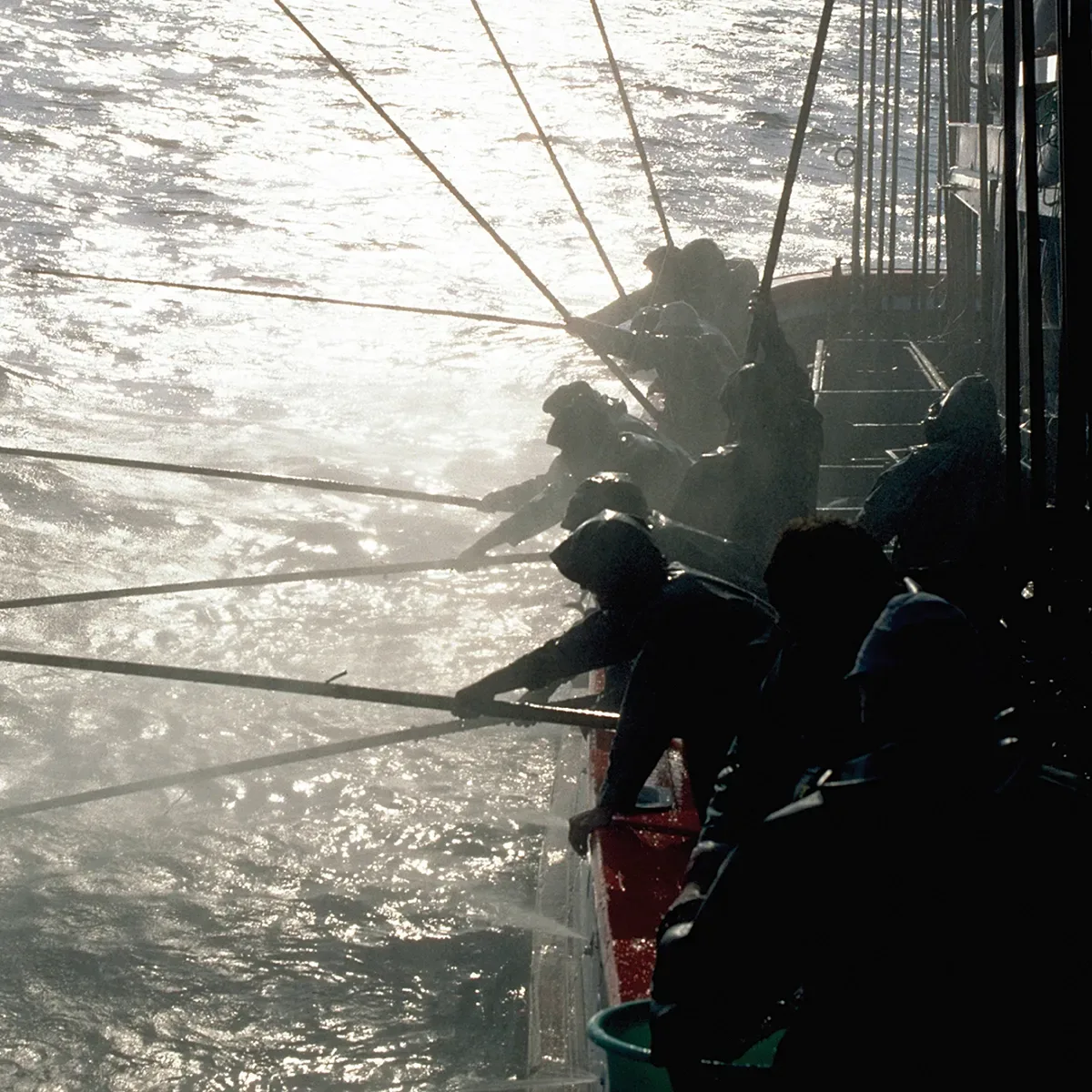
For several centuries, vessels from the ports along the Cantabrian coast would set out to sea in small rowing and sailing boats to catch Albacore tuna (Thunnus alalunga) using trolling, a hook-and-line fishing technique. This was the most widely used method until live-bait fishing emerged in the middle of this century. While the Galician and Asturian fleets mainly use trolling, those of the Basque Country and Cantabria employ live bait. These two traditional fishing methods use rods and hooks, allowing Albacore tuna to be caught one by one and only the finest-quality specimens to be selected.
Our fishing techniques

Purse seine fishing
Anchovy is traditionally caught through purse seine fishing, a selective and environmentally friendly technique that consists of capturing fish that swim in schools on the surface or in mid-water. Once the school of anchovies has been detected, the net is released nearby to surround it and closed at the bottom.

Trolling fishing techniques
It is the oldest and most used technique, employed by the majority of the Basque fleet. The tuna boats deploy long 'perches' with hooks on both sides so that the tuna follow the trail of the camouflaged baits and bite the hook. They are then hoisted on board by hand with reels.

Live bait
Catches are larger, but they require more crew. The boats fish for anchovies or mackerel, leaving them alive in seawater nurseries for use them as bait later. Once the tuna shoal is located, the boat positions itself on it, and the sailors begin to chum the water by throwing the live bait next to the boat.